


Rahul Bhardwaj
Senior Technical Lead at Ksolves India Limited
As enterprises scale Apache NiFi deployments, the need for unified governance, seamless multi-cluster operations, and reduced operational overhead becomes critical. Deploying DFM (NiFi Ops Manager) on Azure Kubernetes Service (AKS) brings together the power of a centralized NiFi management platform with the flexibility, security, and resiliency of Azure’s managed Kubernetes offering.
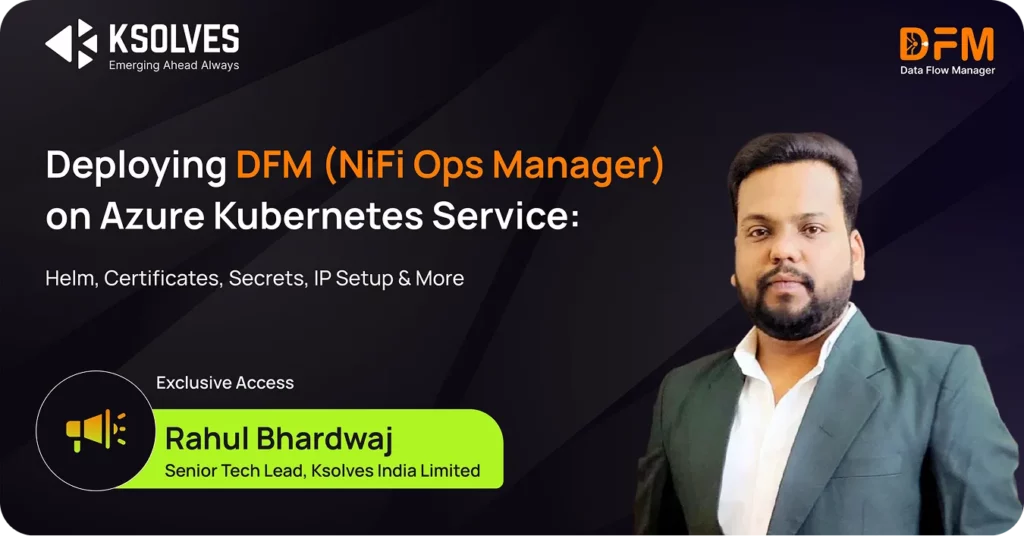
In this in-depth technical session, Rahul Bhardwaj (Senior Technical Lead, Ksolves) provides a complete step-by-step walkthrough of deploying DFM on AKS using Helm. From setting up cluster access to configuring secrets, certificates, namespaces, and load-balanced ingress—this session covers everything required to get DFM running in a production-ready Kubernetes environment.
Perfect for DevOps engineers, data platform teams, and NiFi administrators, this webinar demystifies the deployment journey and equips you to operationalise DFM at scale on AKS confidently.
What You’ll Learn
Understanding DFM & Why AKS
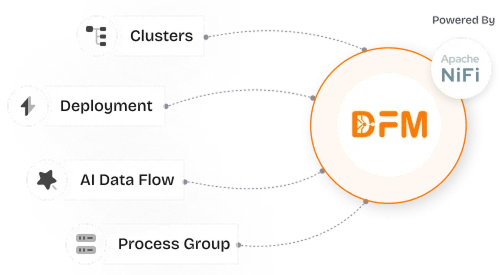
What DFM is and how it centralises, streamlines, and governs the
full lifecycle of Apache NiFi flows
How DFM eliminates direct NiFi UI interactions and increases
operational efficiency by 70%
Why AKS is the ideal infrastructure choice. Autoscaling, high availability, self-healing pods, Azure AD/RBAC, and seamless integration with Key Vault, Monitor, and Storage
Preparing Your Environment
Required CLI tools (Kubectl, Helm, Azure CLI)
Setting environment variables for Azure authentication
Authenticating through
service principals
Fetching AKS cluster configuration for kubectl access
Networking & Kubernetes Prerequisites
Reserving a Static Public IP for DFM
Identifying Node Resource Group and Cluster Region
Creating Kubernetes namespaces
Setting up Docker registry secrets for private image pulls
Configuring Security & Certificates
Installing Cert-Manager for automated certificate generation
Enabling self-signed or Let's Encrypt certificates
Adding public IP to certificate configuration for HTTPS access
Creating Kubernetes secrets for:
DFM Application credentials, Licensing information, Encryption keys and JWT tokens
Deploying DFM with Helm
Unzipping the DFM Helm package
Updating values.yaml for:
Service configuration (LoadBalancer, ClusterIP), Public IP binding, SSL enablement, Environment variables, Ingress settings
Running the Helm install command
Validating deployment using kubectl get all
Post-Deployment Verification
Checking pods, services,
and replica sets
Accessing DFM through the browser using the public IP
Understanding certificate prompts with self-signed certs
Logging into the DFM
administrator dashboard
Key Takeaways
Learn the complete, end-to-end process of deploying DFM on
AKS using Helm
Understand how Kubernetes secrets, namespaces, certificates, and load balancers tie into a secure DFM deployment
Get a practical blueprint you can replicate across dev, staging, or production environments
Discover how DFM + AKS improves NiFi governance, reduces operational complexity, and enhances scalability
Walk away with a deploy-ready command flow and best practices straight from an expert AKS implementation